
 Hyundai Veloster: Brake Line. Repair procedures
Hyundai Veloster 2011-2017 Service Manual / Brake System / Brake System / Brake Line. Repair procedures
Hyundai Veloster: Brake Line. Repair procedures
Hyundai Veloster 2011-2017 Service Manual / Brake System / Brake System / Brake Line. Repair procedures
Hyundai Veloster 2011-2017 Service Manual / Brake System / Brake System / Brake Line. Repair procedures
Removal
| 1. |
Disconnect the brake fluid level switch connector, and remove
the reservoir cap.
|
| 2. |
Remove the brake fluid from the master cylinder reservoir with
a syringe.
|

| 3. |
Remove the wheel & tire.
|
| 4. |
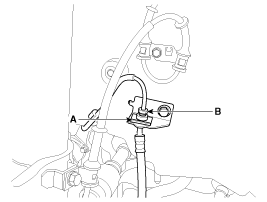
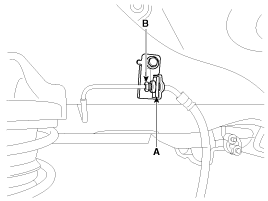
Loosening the tube flare nut (B).
[Front]
[Rear]
|
| 5. |
Disconnect the brake tube by remove the brake hose clip (A).
|
| 6. |
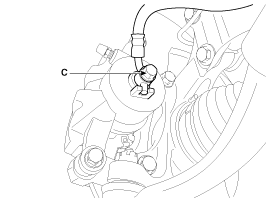
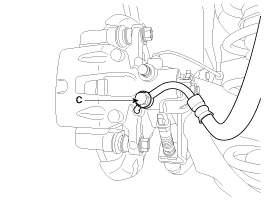
Disconnect the brake hose from the brake caliper by loosening
the bolt (C).
[Front disc brake]
[Rear Disc brake]
|
Inspection
| 1. |
Check the brake tubes for cracks, crimps and corrosion.
|
| 2. |
Check the brake hoses for cracks, damage and fluid leakage.
|
| 3. |
Check the brake tube flare nuts for damage and fluid leakage.
|
| 4. |
Check brake hose mounting bracket for crack or deformation.
|
Installation
| 1. |
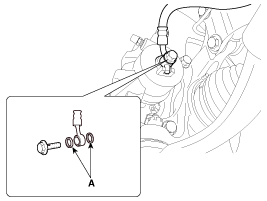
Installation is the reverse of removal.
|
| 2. |
After installation, bleed the
(Refer to Brake system bleeding)
|
| 3. |
Check the spilled brake oil.
|
 Brake Line. Components and Components Location
Components
...
 Brake Pedal. Components and Components Location
Components
1. Cowl bracket
2. Brake pedal member assembly
3. Stop lamp switch
4. Return spring
5. Brake pedal
6. Brake pedal pad
...
See also:
Climate control air filter
Filter inspection
The climate control air filter should be replaced according to the Maintenance
Schedule. If the vehicle is operated in severely air-polluted cities or on dusty
rough roads for a ...
Wheel. Repair procedures
Hub Nut Tightening Sequence
Tighten the hub nuts as follows.
Tightening torque :
88.3 ~ 107.9N.m (9.0 ~ 11.0kgf.m, 65.1 ~ 79.6lb-ft)
...
To set cruise control speed:
1. Press the cruise ON/OFF button on the steering wheel, to turn the system on.
The CRUISE indicator light in the instrument cluster will illuminate.
2. Accelerate to the desired speed, which mus ...
Categories
- Hyundai Veloster Manuals Home
- Hyundai Veloster 2010-2017 Owner's Manual
- Hyundai Veloster 2010-2017 Service Manual

В© 2011-2026 Copyright www.hvmanual.com